
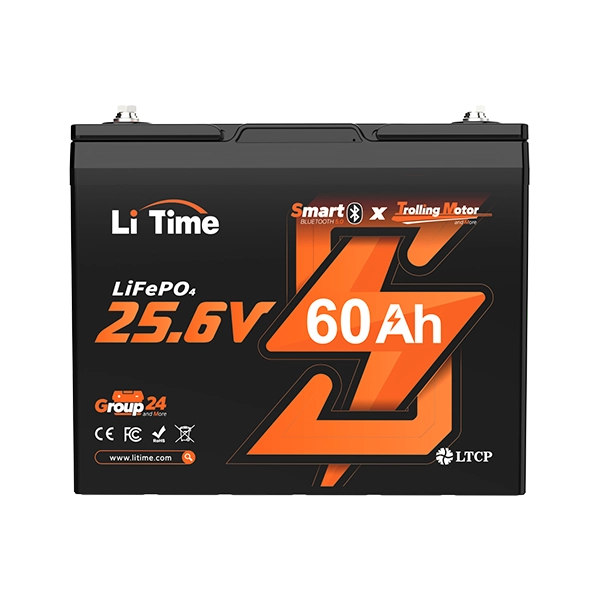


24V 60Ah Lithium Battery: Is It Enough for a Trolling Motor?
Is a 24V 60Ah lithium battery enough for your trolling motor? See runtime estimates, BMS checks, motor examples, and when to choose 100Ah.
Compare up to {MAX} products.



At LiTime, we are shaping a sustainable future with innovative lithium energy solutions. Our mission is clear: Maximize value through tech-driven solutions to achieve easy access to energy freedom. LiTime empowers users to explore new ways of life and discovery, embracing renewable energy for a cleaner, more sustainable world.


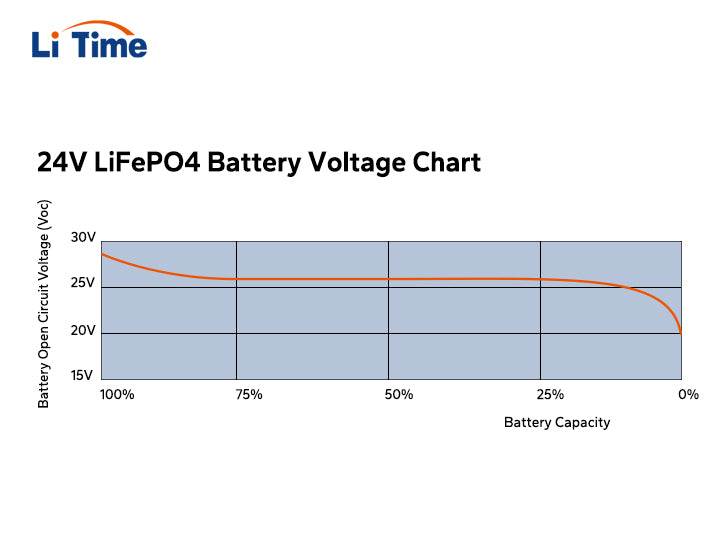
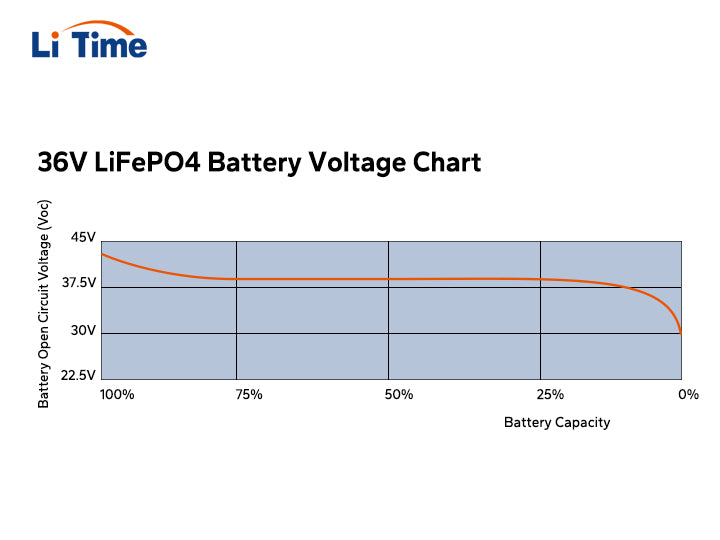
The nominal voltage of a LiFePO4 cell is 3.2V. These cells are considered fully discharged at 2.5V and fully charged at 3.65V. Note that these values may vary based on the specific cell specifications.
Lithium batteries generally have a nominal voltage of approximately 3.7V per cell. When fully charged, a 12V LiFePO4 battery can reach about 13.3V to 13.4V.
A single LiFePO4 cell has a nominal voltage of 3.2V. Its safe operating window is typically between 2.5V (fully discharged) and 3.65V (fully charged). It is critical that the cell voltage does not drop below 2.5V to avoid permanent damage.
The minimum voltage threshold for 12V LiFePO4 batteries is around 10V. Discharging the battery below this voltage can lead to permanent damage. Regularly monitoring the voltage chart is essential for safe charging.
The low voltage cutoff for LiFePO4 batteries is typically set at 2.5V per cell, which is the voltage below which the battery should not discharge to prevent damage.
The bulk/absorb voltage for LiFePO4 batteries usually falls between 14.2V and 14.6V. A voltage of 14.0V may also be acceptable with sufficient absorb time. Slightly higher voltages, around 14.8V to 15.0V, can be used briefly before disconnecting the battery.
While LiFePO4 batteries have a very long life, they will eventually degrade. Here are three common signs that your battery may be failing: ●Reduced Capacity: The battery doesn't hold a charge for as long as it used to. ●Charging Problems: It takes much longer than usual to charge, or it fails to reach a full 100% charge. ●Physical Swelling: The battery case looks puffy or swollen. This indicates an internal failure, and the battery should be safely decommissioned immediately.